Blog

  • Is it the end of SEO blogging?

    Is it the end of SEO blogging?

    Your website is ranking in a top 3 position for your target keywords.

    Great, right?

    Well, your customer didn’t go to Google. They went to ChatGPT instead. Thankfully, your content showed up because of all the awesome AEO/GEO you’ve been doing. Good job!

    But what does that mean for sales? At the end of the day, they used your content for research, not to purchase.

    No click. No traffic. Your expertise was used, just not visited.

    Welcome to 2026.

    The Numbers Don’t Lie

    People keep saying that search behavior has changed. And it has. But at the crux of it, it’s really research behavior that’s shifted. People are still  exploring and investigating, but they’re doing it in a way the feels less biased and (for brief period of time at least), less littered with ads. And this has changed not only the way they search, but also the way they click.

    Zero-click search is no longer a trend. It’s the default.

    • 27.2% of searches now end without a click, up from 24.4% the year prior 
    • Only 40.3% of users click an organic result, down from 44.2% 
    • When AI summaries appear, 26% of searches end without any further action, vs just 16% without them 

    And it gets more aggressive inside AI-driven environments:

    • In Google’s AI Mode, 92–94% of searches are zero-click 

    At the same time, visibility is increasing while engagement drops:

    • Organic CTR on queries with AI Overviews has fallen 61% since mid-2024 

    So guess what, all that content you worked so hard on is totally being seen!  

    It’s just not being visited. Womp.

    SEO content isn’t dead. It’s just evolving.

    This is where Answer Engine Optimization (AEO) comes in. A lot of people are talking about AEO and GEO as if there’s some magical solution everyone is missing.

    But the reality? Many of the same fundamentals still apply. You’re just reorganizing and repurposing how you prepare your content.

    The shift is simple, but brutal:

    • Old SEO: How do I get people to click my site?
    • AEO: How do I become the source AI recommends?

    Because search engines are no longer just ranking pages. They are summarizing them.

    It’s true that traditional SEO measurement, built around rankings and clicks, is becoming less meaningful in zero-click environments where visibility matters more than traffic.

    However, the goal is no longer just visibility. It’s ensuring your brand is both present and remembered. When people are going through their research journey and your brand shows up as a recommended “top product,” that visibility can still contribute to a sale later on, even if they don’t click right away.

    What Winning Content Looks Like Now

    A common mistake right now is writing content purely for AI answer engines. While there are elements of that approach that matter, you still need to prioritize content that is original, unique, and genuinely interesting to readers. AI relies on human-created content to build its answers. That part does not change.

    From there, you should absolutely think about how your content is structured so it is easy for answer engines to interpret and surface.

    That means:

    Answer first

    AI summaries pull directly from content that surfaces clear answers quickly.

    Structured and scannable

    AI favors content it can parse. Lists, headers, and schema matter more than ever.

    Consistency everywhere

    AI systems evaluate your brand as an entity. Inconsistent signals reduce trust.

    Local relevance

    AI personalization means geography plays a bigger role in what gets surfaced.

    Multi-format content

    Search is no longer just web pages. Video, summaries, and structured data all feed AI systems.

    This shift is especially important because AI Overviews are not evenly distributed:

    • They appear in 57.1% of informational queries, far more than transactional or navigational searches 

    This means that, unlike ever before, top-of-funnel content is being used as results, by being summarized  by AI.

    The Real Threat: You’re Losing Attribution

    Here’s where everything gets even more frustrating. With this shift to answer engine research, it’s harder to measure the success and impact of your SEO/AEO/GEO efforts. 

    On paper, traffic is declining.

    But at the same time, your influence is increasing.

    AI is:

    • Consuming your content
    • Synthesizing it
    • Delivering it without sending users back

    Search and answer engines are increasingly designed to keep users on the results page:

    • AI summaries and SERP features are reducing the need to click at all 

    And when ads and AI Overviews appear together? Users are even more likely to stay within Google’s ecosystem rather than visit your site 

    Your content is still doing its job.

    You’re just not getting credit for it.

    The New KPIs That Matter

    If you’re still measuring success purely on clicks, you’re behind.

    Start tracking:

    • AI citations and mentions across ChatGPT, Google AI Overviews, Perplexity, Gemini
    • Assisted conversions influenced by AI exposure
    • The type of content that is being referenced
    • The type of queries that are showcasing your brand
    • Lead quality from AI-driven discovery
    • Entity consistency across the web

    Finally, keep a close eye on revenue and conversion rates from both organic AND direct traffic. With research increasingly happening before a user ever reaches your site, they are often much closer to the purchase stage when they arrive.

    In this environment, visibility without clicks still drives outcomes.

    What Marketers Are Actually Seeing

    The data is clear, and so is the experience.

    Across the industry, teams are seeing the same pattern: 

    • More impressions
    • Fewer clicks
    • Higher intent users
    • Confused and frustrated brands

     AI-driven search visitors are often more valuable than traditional organic traffic, even as overall volume declines.

    Meaning: less traffic does not necessarily mean less impact.

    At the same time, AI Overviews, summaries, and zero-click experiences are reshaping how content is consumed. Informational clicks are being replaced, the funnel is compressing, and answers are taking priority over exploration. Traditional SEO playbooks built around traffic acquisition are starting to break down.

    What This Means for Your Strategy

    Stop optimizing only for clicks.

    The shift is toward a dual approach: SEO for rankings, and AEO for visibility and influence. Your content needs to work in two ways, for humans who read and for AI systems that extract.

    That also means changing how you measure success. Track presence, not just traffic. Track influence, not just sessions. Visibility without clicks can still drive real outcomes, especially as users arrive on your site later in their decision-making process.

    Final Thought

    So, does SEO blogging still work? 

    It can. If it’s authentic, genuinely useful and, of course, properly structured for our new robot overlords.

    Your content should be built to be read, but also to be used.

    Sources:

    https://www.semrush.com/blog/ai-seo-statistics

    https://www.forbes.com/sites/bernardmarr/2025/08/07/what-is-zero-click-and-why-is-it-turning-marketing-on-its-head

    https://www.semrush.com/blog/serps-with-ads-and-ai-overviews

  • How Ninja Transfers Unlocked +22% More Group Orders with Bevy Share Cart

    How Ninja Transfers Unlocked +22% More Group Orders with Bevy Share Cart

    When Growth Creates Friction

    Ninja Transfers was growing fast. New customers were flooding in, but their buying behavior revealed a hidden problem.

    A large portion of customers weren’t shopping alone. They were buying in groups: teams, families, small businesses, and event organizers coordinating purchases together.

    On paper, this should have led to larger orders and higher revenue per transaction.

    In reality, it was doing the opposite.

    The Hidden Conversion Killer

    Customers wanted to collaborate, but the buying experience made it nearly impossible.

    Instead of a seamless process, they were forced into workarounds:

    • Screenshotting carts
    • Rebuilding orders manually
    • Sharing product links back and forth
    • Confirming sizes and quantities over messages

    The result?

    Confusion, delays, and abandoned carts.

    Ninja wasn’t losing demand, they were losing conversions.

    The Insight

    Collaboration wasn’t an edge case, it was core to how Ninja’s customers naturally bought.

    Small business owners, teachers, Etsy sellers, and event planners all needed to make purchase decisions together.

    But the tools they had weren’t built for that behavior.

    The Solution: Bevy Share Cart

    Bevy Commerce introduced Share Cart, a simple but powerful feature designed for collaborative buying.

    Customers can:

    • Build a cart exactly how they want
    • Generate a single shareable link
    • Send it to collaborators for approval

    Recipients open the link and see the exact cart, items, sizes, quantities, ready to purchase.

    No rebuilding. No confusion. No friction.

    The Results

    Within 60 days of implementation, Ninja Transfers saw measurable impact:

    +22% Increase in Group Orders

    Customers could finally complete purchases together. Orders that previously stalled now converted seamlessly.

    +14–18% Increase in AOV

    Pre-built carts made it easier for groups to approve full orders, driving higher-value transactions.

    -35% Faster Time to Checkout

    Approval cycles shrank from days (or weeks) to hours. Less back-and-forth meant fewer abandoned carts.

    9–12% of New Traffic from Shared Carts

    Each shared cart became a built-in referral engine, driving incremental traffic and revenue without additional ad spend.

    Why It Worked

    Bevy Share Cart succeeded because it didn’t try to change customer behavior, it enabled it.

    Ninja’s customers were already collaborating. The platform simply removed the friction that was slowing them down.

    By aligning the experience with how customers naturally buy, Ninja unlocked:

    • Higher conversion rates
    • Larger orders
    • Faster purchase decisions
    • Organic, referral-driven growth

    Client Perspective

    “Bevy Share Cart fits perfectly into how our customers naturally buy. People ordering custom apparel often need to collaborate, and Share Cart eliminates the friction completely. It’s like adding a built-in referral engine and a collaboration tool at the same time.”

    –  Ninja Transfers Team

    The Takeaway

    Sometimes the biggest growth lever isn’t driving more traffic, it’s removing friction from the buying process.

    For Ninja Transfers, enabling collaboration led to:

    • +22% more group orders
    • +18% higher AOV
    • 35% faster approvals
    • 9-12% incremental traffic from sharing

    Ready to Unlock Similar Growth?

    If your customers are trying to collaborate but your site isn’t built for it, you’re leaving revenue on the table.

    Bevy Share Cart helps you meet customers where they already are, and convert demand that would otherwise be lost.

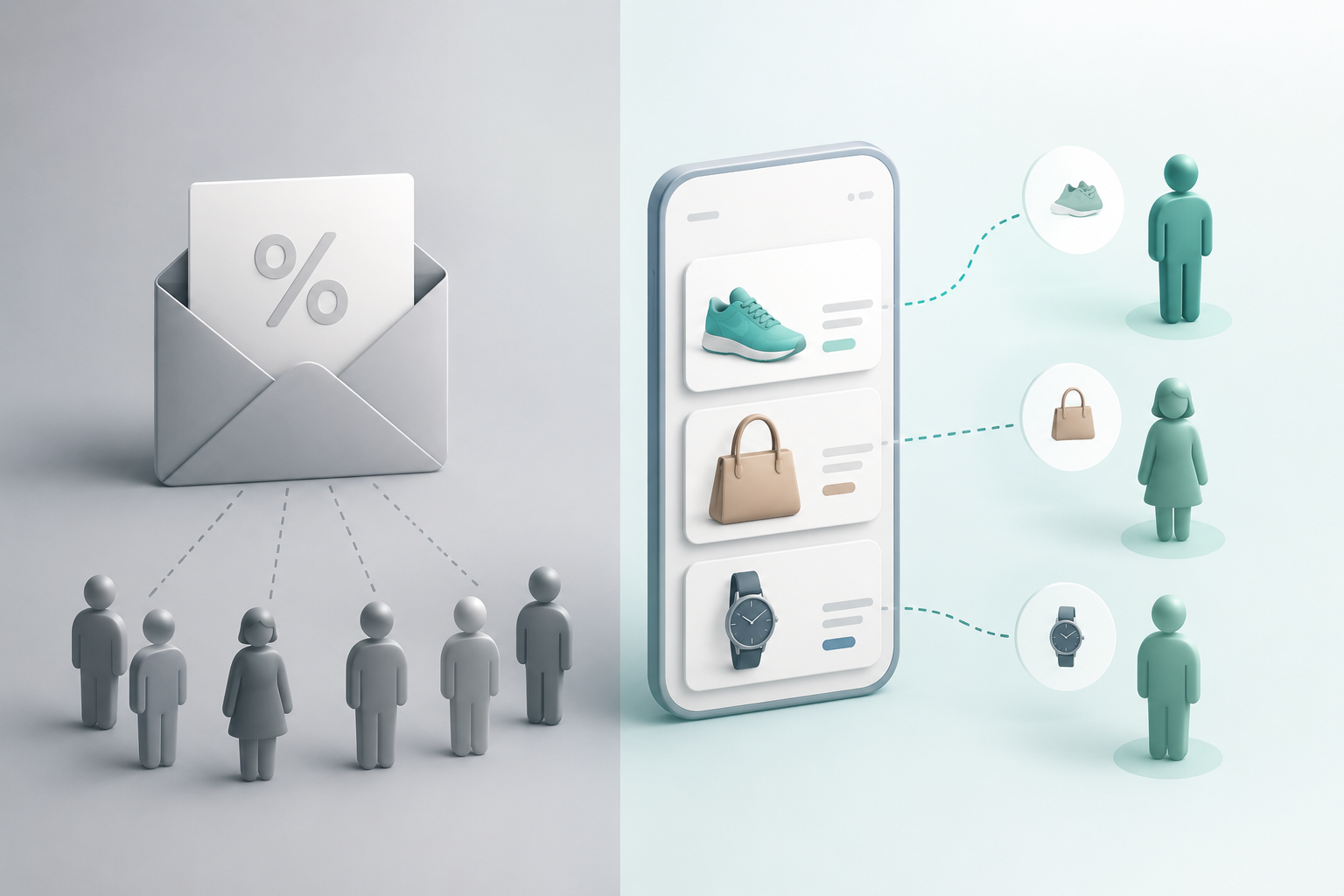
  • How AI Shopping Assistants Are Changing Product Discovery

    How AI Shopping Assistants Are Changing Product Discovery

    Artificial intelligence is rapidly reshaping how people shop online.

    Instead of searching across dozens of websites, shoppers are beginning to rely on AI assistants to recommend products, compare options, and guide purchase decisions — all through conversation.

    Recently, Meta Platforms began testing an AI-powered shopping research tool that helps users discover and compare products conversationally. The tool surfaces recommendations with images, pricing, and direct retailer links, similar to capabilities being explored by OpenAI and Google.

    This signals a major shift in digital commerce:

    Product discovery is becoming conversational.

    The Shift from Search to Conversation

    For years, online shopping followed a predictable path:

    Search → browse → compare → purchase.

    AI is compressing that entire journey into a single interaction.

    Instead of typing keywords like:

    “best wireless earbuds”

    Consumers can now ask:

    • “What are the best wireless earbuds under $150?”
    • “Which laptop is best for video editing?”
    • “What are the top running shoes this year?”

    Within seconds, AI delivers curated recommendations, complete with pricing, features, and reviews.

    The result: less friction, faster decisions, and fewer steps between discovery and purchase.

    Why Tech Giants Are Betting on AI Shopping

    Product discovery is one of the most valuable layers of the internet economy.

    Historically, search engines controlled this layer. Brands competed through SEO, paid media, and marketplace rankings to win visibility.

    AI assistants have the potential to disrupt that model entirely.

    If consumers begin asking AI what to buy instead of searching manually, these platforms will directly influence purchasing decisions at scale.

    That’s why companies like Meta Platforms, OpenAI, and Google are investing heavily in AI-powered shopping experiences — they want to become the first place consumers go when making a decision.

    How AI Shopping Assistants Work

    AI shopping tools combine multiple technologies to streamline product discovery:

    Natural Language Understanding

    Users can describe what they want in plain language — no need to guess the “right” keywords.

    Product Data Aggregation

    AI pulls from product catalogs, reviews, specifications, and pricing to compare options instantly.

    Personalized Recommendations

    Over time, recommendations can become more tailored, factoring in preferences, behavior, and budget.

    Direct Paths to Purchase

    Most AI tools don’t sell products directly. Instead, they guide users to retailer websites to complete the purchase.

    This means your storefront still matters — just more than ever.

    What This Means for Online Businesses

    AI-driven discovery is changing how customers find products, and brands will need to adapt.

    1. Discovery Channels Are Expanding

    SEO and paid media aren’t going away, but they won’t be the only way customers find you.

    AI-generated recommendations are becoming a new acquisition channel.

    Implication: Your product data needs to be clean, structured, and machine-readable.

    2. Brand Trust Becomes a Ranking Factor

    AI recommendations rely heavily on signals like

    • Reviews
    • Ratings
    • Product reliability

    Brands with strong reputations are more likely to be surfaced.

    3. Shorter Consideration Cycles

    AI can summarize comparisons instantly, reducing the time between research and purchase.

    Outcome: Faster decisions, and higher conversion potential for brands that show up in recommendations.

    4. Social + AI + Commerce Are Converging

    Meta Platforms entering AI-powered shopping highlights a bigger shift: the merging of social discovery and commerce. With platforms like Facebook, Instagram, and WhatsApp, AI could sit directly inside the environments where users already spend time.

    Future journey example:

    Discover on social → ask AI → compare → purchase

    All within a single ecosystem.

    The Future of AI in E-commerce

    AI shopping assistants are still evolving, but the direction is clear.

    Consumers are becoming increasingly comfortable asking AI for:

    • Advice
    • Recommendations
    • Purchase guidance

    Over time, these systems may function like true personal shopping assistants,

    understanding preferences, budgets, and intent at an individual level.

    For businesses, this introduces a new reality:

    AI will influence which products get seen, and which get ignored.

    How Brands Should Prepare

    To stay competitive in an AI-driven discovery landscape:

    • Invest in high-quality product data (structured, accurate, complete)
    • Prioritize reviews and customer satisfaction
    • Optimize your storefront experience for conversion
    • Build brand authority and trust signals

    Brands that adapt early will be best positioned to benefit from AI-driven traffic and recommendations.

    A New Way to Shop

    AI-powered shopping tools represent the next evolution of digital commerce.

    Instead of navigating endless search results, consumers can now rely on AI to guide decisions quickly and confidently.

    For shoppers, it means convenience.

    For businesses, it means a new competitive landscape.

    And as companies like Meta Platforms, OpenAI, and Google continue to invest in conversational AI, one thing is clear:

    The future of shopping starts with a question, not a search.

  • Why Google Isn’t the Only SEO Channel Anymore

    Why Google Isn’t the Only SEO Channel Anymore

    Picture this.

    You discover a new skincare brand on TikTok.

    You ask ChatGPT for the best carry-on luggage.

    You search Pinterest for spring outfit inspiration.

    You watch YouTube reviews before buying a camera.

    None of that starts on Google.

    For years, SEO meant one thing: rank on Google and you win.

    That’s not how discovery works anymore in 2026.

    The Search Landscape Has Fragmented

    Google still dominates traditional search with roughly 90% market share. That hasn’t disappeared.

    But search behavior has expanded far beyond one platform.

    • Millions of users now ask ChatGPT and other AI tools questions instead of typing queries into Google.
    • Gemini and other AI chatbots are rapidly growing in adoption.
    • TikTok search usage has surged dramatically over the past few years.
    • YouTube remains the second-largest search engine in the world.
    • Pinterest reaches over 600 million monthly users.
    • Nearly half of Gen Z begins product discovery on TikTok or Instagram instead of Google.

    Search hasn’t disappeared.

    It has decentralized.

    What This Means for Brands

    If your entire SEO strategy is built around ranking blue links on Google, you’re invisible across massive discovery channels.

    Your audience is:

    • Discovering products through TikTok search
    • Researching on YouTube
    • Saving inspiration on Pinterest
    • Asking AI tools for recommendations
    • Searching directly on Amazon or Etsy

    If you’re not present where discovery starts, you’re not even in the consideration set.

    Where Search Actually Happens Now

    Traditional Search

    • Google
    • Bing

    Still foundational. Still critical. But no longer the whole game.

    AI Search & Answer Engines

    • Google AI Overviews
    • ChatGPT
    • Gemini

    Users expect direct answers, summaries, and recommendations. Visibility now includes being cited, referenced, or structured for AI retrieval.

    Social Search

    • TikTok
    • Instagram
    • Pinterest
    • Reddit

    Search here is visual, trend-driven, and intent-based. Keywords matter — but so do formats, captions, hooks, and engagement signals.

    Video Search

    • YouTube

    People actively search YouTube for comparisons, reviews, tutorials, and buying guidance.

    Marketplace Search

    • Google Shopping
    • Amazon
    • Etsy
    • ChatGPT (slow but growing)

    For many shoppers, product search starts directly on the platform where purchase happens.

    The Strategic Shift

    This doesn’t mean abandoning Google.

    It means expanding your definition of SEO.

    Modern search strategy now includes:

    • Structuring content so AI tools can cite and retrieve it
    • Creating YouTube content that ranks for high-intent queries
    • Optimizing TikTok and Instagram captions for discoverability
    • Leveraging Pinterest for visual search
    • Treating Amazon and marketplace listings like SEO assets
    • Thinking beyond keywords to formats, intent, and platform behavior

    Search is no longer a single algorithm.

    It’s an ecosystem.

    The Competitive Advantage

    Most brands still treat SEO as “Google rankings.”

    That gap is your opportunity.

    The brands that win in 2026 are optimizing for:

    • Where discovery begins
    • How AI summarizes information
    • How Gen Z searches
    • How visual platforms surface content
    • How marketplaces prioritize products

    Discovery doesn’t start in one place anymore.

    It starts wherever your customer is scrolling, asking, watching, or shopping.

    Show up there.

    That’s the new SEO.Welcome to WordPress. This is your first post. Edit or delete it, then start writing!

  • Sales Cycles Are Back, But Smart Tech Closes Faster

    Sales Cycles Are Back, But Smart Tech Closes Faster

    Let’s be real.

    If you’ve been anywhere near SaaS or commerce in the last couple of years, you’ve probably felt the drag of the sales cycle.

    Deals that used to close in weeks now take months.

    Budgets froze.

    Buying committees doubled.

    But 2025 feels different.

    Budgets are opening up. Companies are ready to spend again.

    The catch? They’re spending carefully. Which means you need to work smarter to win them over.

    Buyers Are Back, But They’re Not Messing Around

    Today’s buyers ask tougher questions:

    • Will this actually lower acquisition costs?
    • Can it keep customers around longer?
    • Does it integrate with what we already use or add headaches?

    They should be asking those questions. It forces all of us to move past the fluff and prove real value.

    Smart Tech = Shorter Distances

    Sales cycles won’t disappear. But the right tech shrinks the distance between interest and decision:

    • Onboarding flows that deliver a win on Day 1
    • Demos tailored to their business, not a generic deck
    • Predictive insights that surface opportunities before they ask
    • ROI calculators that turn “trust me” into “see for yourself”

    These aren’t gimmicks. They’re trust accelerators.

    Why It Matters in Commerce

    Merchants don’t have time to waste. Rising ad costs, fickle customers, tighter budgets. Patience is gone.

    They don’t want to “wait and see.”

    They want results:

    • Faster checkouts
    • Fewer abandoned carts
    • More repeat customers

    If you can deliver that, you’re not selling software. You’re selling peace of mind.

    One Last Thought

    Sales cycles are back, but they don’t have to feel endless.

    Show value early. Build trust quickly. Close faster.

    At Bevy, that’s exactly what we help brands do, prove their worth not in theory, but in action.

    In 2025, the winners will be the ones who shorten the distance between “Why should I buy?” and “I’m glad I did.”

  • Meta vs. TikTok in 2025: Where Ad Dollars Actually Drive ROI

    Meta vs. TikTok in 2025: Where Ad Dollars Actually Drive ROI

    In the wild world of digital advertising, it can feel like you’re tossing money into a black hole and hoping for the best. But in 2025, two platforms dominate the conversation: Meta (Facebook, Instagram, Reels) and TikTok.

    Both are powerhouses, but they win in very different ways.

    So where should your hard-earned budget go if you’re trying to get real ROI?

    Let’s break it down.

    1. Meta: Your Smart, Reliable Closer

    Think of Meta as the seasoned salesperson who knows exactly what you need — often before you do. It has the data, the experience, and the machine learning sophistication to consistently turn interest into revenue.

    Why Meta Earns Your Ad Dollars in 2025

    The Conversion Powerhouse

    Meta is built to close.

    Decades of behavioral data, powerful machine learning, and the Meta Pixel make it one of the strongest revenue engines in performance marketing.

    You may spend more per click but those clicks are far more likely to convert.

    ROAS is Meta’s home field advantage.

    Retargeting Royalty

    Someone browsed your product and got distracted by a cat video?

    Meta never forgets.

    Its retargeting capabilities are unmatched: dynamic ads, cart recovery, recently viewed products, custom audiences. This is where abandoned carts go to die — and conversion rates spike.

    Where Grown-Ups Actually Are

    If your customers are:

    • Over 30
    • Shopping for home, lifestyle, kids, or essentials
    • Local, regional, or mid-market buyers

    Meta is where they scroll every day. It’s a mature, stable ecosystem with broad reach across Facebook, Instagram, and WhatsApp.

    The Vibe

    A high-end department store: organized, predictable, and tailored to your preferences. It remembers you, follows up, and closes the sale.

    2. TikTok: Your Viral Discovery Engine

    If Meta is the seasoned pro, TikTok is the energetic street market where trends explode, creators thrive, and brands get discovered overnight.

    Why TikTok Earns Your Ad Dollars in 2025

    Unmatched Viral Reach

    TikTok’s algorithm is a discovery machine.

    Great creative + modest spend = millions of views.

    Its low CPMs make it the most cost-efficient awareness platform on the internet. If your goal is to get people talking, TikTok is unbeatable.

    Gen Z’s Homebase (and Everyone Who Follows Their Trends)

    TikTok owns:

    • Gen Z
    • Younger millennials
    • Trendsetters
    • Culture-makers

    If your product is visual, fun, innovative, or “TikTokable,” you must be here.

    And with TikTok Shop gaining traction, awareness is converting into revenue faster than ever.

    Authenticity Beats Production Value

    The secret to TikTok is simple:

    Ads that don’t look like ads win.

    UGC-style videos, lo-fi creative, storytelling, trends, and creator collabs outperform polished “big brand” creative.

    That means your dollars go further because authenticity is cheaper and performs better.

    The Vibe

    A buzzing, colorful street fair where trends start, creators shine, and the next big thing is just one swipe away.

    So… Meta or TikTok? The Smartest Move is Both.

    Here’s the real strategy in 2025:

    Don’t pick sides – pair their strengths.

    The best marketers run a two-step funnel:

    Step 1: TikTok for Awareness + Consideration

    Use TikTok to:

    • Reach millions affordably
    • Build hype
    • Introduce new products
    • Generate interest and engagement
    • Capture attention while costs are still low

    TikTok brings in new audiences at scale.

    Step 2: Meta to Retarget + Convert

    Then use Meta to:

    • Retarget engaged TikTok viewers
    • Retarget site visitors
    • Drive cart completions
    • Maximize ROAS
    • Run high-intent purchase campaigns

    Meta closes the deal at the bottom of the funnel.

    The Winning Formula

    TikTok makes them aware → Meta makes them buy.

    It’s the most efficient path to profitable scaling in 2025.

    Bottom Line

    When you understand what each platform does best, you stop “hoping” your ad spend will work and start strategically investing it where it delivers the highest ROI.

    Use TikTok to spark discovery, culture, and mass awareness at low cost.

    Use Meta to drive conversions, build remarketing pools, and reliably turn interest into revenue.

    That’s how brands scale profitably in 2025.

  • Is Google Search Live the Future of Search?

    Is Google Search Live the Future of Search?

    Is Google Search Live the Future of Search?

    Think about how we’ve always used Google:

    We type. We hit enter. We scroll.

    Then came the next leap: voice search.

    “Hey Google, what’s the weather?”

    Suddenly, we could ask instead of type.

    Now, Google is taking an even bigger step into the future with something that feels more natural… and almost human.

    Enter Search Live: The First Truly Multimodal Search

    With Search Live, you don’t just ask, you show.

    Point your camera at something and say, “What is this?” or “How much does this cost?”

    Google sees and hears simultaneously, giving you an AI-powered answer in real time.

    We’ve had glimpses of this evolution:

    • Voice search gave us hands-free convenience.
    • Google Lens taught our phones to see: translating text, identifying objects, and helping us shop.

    Search Live finally merges those two worlds.

    Speech + vision = a seamless, conversational interaction with the world in front of you.

    Instead of typing keywords into a box, you’re having a real-time dialogue with your surroundings.

    What It Means for Everyday Users

    The beauty of Search Live is its simplicity. Imagine:

    • You’re in a store, see a pair of sneakers, and ask: “Where can I buy these online?”
    • You’re traveling, point at a monument, and ask: “What’s the history behind this?”
    • You’re fixing something at home, point at a device, and ask: “Why is this light flashing?”

    No typing. No guesswork. No keywords.

    Just show and ask.

    It’s not hard to see why this feels like the natural next step for search.

  • Virtual Human Salespeople in Live-Commerce: The Future of Selling Is Already Here

    Virtual Human Salespeople in Live-Commerce: The Future of Selling Is Already Here

    Imagine scrolling through a late-night shopping stream.

    The host greets you, answers your questions, and keeps the energy high.

    Everything feels normal until you realize the host isn’t human.

    It’s a virtual human salesperson — an AI-powered avatar that looks, talks, and sells like a real person.

    No breaks. No off days. Just pure, on-brand energy, 24/7.

    Sound futuristic? It’s already happening, at scale, in China.

    And it’s only a matter of time before the rest of the world follows.

    What Exactly Are Virtual Human Salespeople?

    Think of them as AI hosts for live shopping.

    They can present your products, answer live comments, smile, gesture, and even change tone or expression, all powered by a mix of animation and conversational AI.

    They’re not chatbots with faces.

    They’re a new kind of digital employee that merges content, conversation, and commerce in real time.

    Why Live-Commerce Is Their Perfect Playground

    Live-commerce is already massive in markets like China, where audiences tune in not just to shop, but to chat, be entertained, and connect.

    It’s fast, emotional, and persuasive — the perfect environment for AI hosts.

    Now imagine doing that around the clock, in multiple languages, without worrying about burnout, inconsistency, or training costs.

    That’s what makes virtual salespeople so powerful.

    They can host multiple sessions at once, keep messaging perfectly on-brand, handle FAQs instantly, and scale your live-selling presence globally.

    Real Examples: How China Is Leading the Way

    China is the world’s most advanced market for AI-driven live-commerce, and the results are already impressive.

    • Brother, the printer brand, ran a livestream hosted entirely by an AI avatar. Within two hours, the virtual host sold the equivalent of $2,500 in printers and helped drive a 30% sales lift compared to human-hosted streams.
    • PLTFRM, a Shanghai-based company, has deployed over 30 virtual influencers across major platforms like Taobao and Pinduoduo, promoting everything from wet wipes to electronics — all powered by generative AI and animation models.
    • Baidu tested a virtual version of popular influencer Luo Yonghao, streaming for six hours. The AI avatar drew 13 million views and generated 55 million RMB (around $7.6 million) in sales in a single session.

    These examples show the potential scale. Virtual hosts can stream all day, in any time zone, and keep viewers engaged long after human creators would need a break.

    The Technology Behind the Trend

    Today’s AI avatars combine large language models with synthetic video tools.

    They can read live comments, detect emotional tone, adjust their delivery, and mirror audience sentiment in real time.

    Companies like Baidu and DeepBrain AI are already building end-to-end systems that can train avatars to respond using brand-approved scripts while learning from live engagement data.

    The result: lifelike hosts that can sell, educate, and entertain without human fatigue.

    Of Course, It’s Not Perfect Yet

    There are still limitations.

    Some viewers find the avatars uncanny or too robotic. Others crave the spontaneity and warmth of a real person.

    There have been humorous missteps too. One AI host in China was tricked into meowing for 46 seconds straight by mischievous viewers.

    Even so, the technology is improving rapidly.

    Every few months, updates make avatars more expressive, conversational, and capable of nuanced interaction.

    Research also shows that while human hosts still convert better when emotion or storytelling are key, AI hosts excel at scale, consistency, and accessibility — all critical for global eCommerce.

    Why Brands Should Pay Attention

    Whether you’re a small DTC brand or a large retailer, the opportunity is hard to ignore.

    AI salespeople can:

    • Sell 24/7 across time zones
    • Maintain consistency in tone, messaging, and brand values
    • Scale instantly across multiple languages and platforms
    • Lower operational costs once the setup is complete

    This isn’t about replacing humans.

    It’s about extending your reach — giving your brand a face and voice that can engage customers anytime, anywhere.

    Your best human host can’t go live ten times a day.

    Your virtual one can.

    How to Start Experimenting

    Curious where to begin? Start small.

    • Try a hybrid format: a human host with an AI co-host.
    • Choose a simple product category (beauty, gadgets, or accessories).
    • Train your AI with your brand tone, FAQs, and customer insights.
    • Be transparent — let audiences know it’s AI. Honesty builds trust.
    • Measure and iterate. Track engagement, conversion, and retention to refine performance.

    Treat it like onboarding a new team member. Your first virtual salesperson might need “training,” but once it learns your brand, it never stops working.

    The Bigger Picture

    This shift isn’t just about AI selling more products.

    It’s about how people want to interact with brands.

    We’re moving from search to conversation.

    From scrolling to streaming.

    From ads to avatars.

    And in that shift, brands that adapt early will win.

    Because when customers can talk directly to a friendly, knowledgeable virtual face — at any time of day — that becomes your most powerful conversion funnel.

    Final Thought

    Virtual human salespeople may not replace human hosts anytime soon, but they’re already changing the rules of engagement in live-commerce.

    It’s not man versus machine.

    It’s man plus machine, working together to create something faster, more personal, and infinitely scalable.

    If your brand isn’t exploring this yet, now’s the time.

    Because while your competitors are sleeping, their virtual salespeople might already be streaming.

  • How AI Is Reshaping SEO: What It Means for Monetization & Brand Visibility in the E-Commerce Space

    How AI Is Reshaping SEO: What It Means for Monetization & Brand Visibility in the E-Commerce Space

    Search is changing faster than ever.

    So in turn, so is user behavior. AI-driven tools like Google’s AI Overviews, Gemini, DeepSeek, Copilot, and ChatGPT’s browsing capabilities are completely redefining how people discover and interact with content online.

    SEO is no longer just about ranking. It’s about how clearly your content can be understood, summarized, and surfaced by machines.

    Who is this affecting:

    • Traffic monetizers: bloggers, affiliates, publishers who rely on ad impressions and clicks.
    • Brand builders: Shopify merchants, DTC businesses, and leaders who rely on visibility to grow awareness and trust.

    The challenge?

    AI is inserting a new layer between your content and your audience. Generative search summaries often provide direct answers without a click. That means even top-ranking pages may lose traffic.

    For publishers, that’s a direct hit on ad-driven revenue.

    For brands, it’s the risk of being left out of the conversation while competitors earn visibility inside AI-generated results.

    It’s no longer just about ranking. It’s about showing up in the AI’s version of the answer.

    What’s Changing in SEO

    Search is becoming more contextual. Machines are less concerned with keywords and more focused on meaning, clarity, and authority. AI rewards content that is structured, helpful, and trustworthy.

    Modern SEO now requires optimizing for machine interpretability as much as for human readability. Large language models and search algorithms prioritize content that is:

    • Well-structured for parsing and indexing.
    • Backed by signals of trust and authority.
    • Differentiated with unique value that AI cannot simply regenerate.

    Key Technical Priorities

    Content architecture: Use semantic HTML (H1–H3 hierarchy, ordered/unordered lists, tables) so search engines can accurately segment and weight information.

    Schema markup & structured data: Implement relevant schema (e.g., Product, FAQ, HowTo, Article) to provide machine-readable context and improve eligibility for AI summaries and rich snippets.

    E-E-A-T alignment: Ensure content demonstrates Experience, Expertise, Authoritativeness, and Trustworthiness. This includes author bios with credentials, links to authoritative sources, and transparent sourcing.

    Unique data & insights: Publish proprietary information (e.g., surveys, case studies, customer data, first-party research). AI models are less likely to rewrite or dilute content with verifiable originality.

    Topical depth & internal linking: Build content clusters that demonstrate subject-matter expertise, connected through optimized internal linking to reinforce topical authority.

    The shift is clear: SEO is moving from keyword matching to knowledge representation. To win visibility in an AI-driven search environment, content must not only answer questions but also be machine-readable, verifiable, and authoritative at scale.

    What Shopify Merchants Can Do

    For Shopify merchants, this shift is actually an opportunity. Many stores focus only on driving traffic, but the real advantage lies in turning attention into trust and conversions.

    AI may reduce clicks, but it cannot replace authentic experiences, compelling stories, or strong product positioning. That’s where you can stand out.

    Build content that:

    • Tells the story behind your product.
    • Shares customer reviews, testimonials, and use cases.
    • Compares options to help buyers make informed decisions.

    Also, ensure your site is technically optimized. Schema markup helps AI understand your products, pricing, reviews, and availability, making your store more likely to surface in AI-driven results.

    The Bigger Picture

    AI isn’t killing SEO. It’s redefining it. Ranking is still important, but resonance matters more. You need to be clear, credible, and genuinely useful at every touchpoint.

    The brands that win in this new era will be those that build trust, not just traffic. Whether you’re writing a blog post or crafting a product page, your goal is the same: make it easy for both humans and machines to understand what you offer, why it matters, and why you’re the best choice.

    Search is always evolving, that’s not new. Are you evolving with it?

  • Why Pinterest Should Be in Your Full-Funnel Media Mix in 2025

    Why Pinterest Should Be in Your Full-Funnel Media Mix in 2025

    In the world of digital advertising, platforms like Meta, TikTok, and Google dominate most media plans. Pinterest is often overlooked, or worse, misunderstood. Many businesses still view Pinterest as a digital scrapbook for hobbyists, useful only for branding or top-of-funnel awareness. That mindset is outdated and leaves serious performance on the table.

    Pinterest has evolved into a full-scale advertising platform with a unique blend of intent, discovery, and conversion potential. In 2025, the platform is no longer just a playground for inspiration, it is a powerful engine for measurable business results across the entire customer journey.

    This blog will explore why Pinterest belongs in your media mix, not as an optional experiment, but as a strategic full-funnel channel. You will discover how Pinterest supports every stage of the funnel, how it compares to other platforms, and what practical actions your business can take to turn Pinterest into a consistent performance asset in 2025.

    Pinterest in 2025 – The Underdog with Serious Muscle

    Pinterest in 2025 is not the same platform it was even three years ago. While it once operated on the sidelines of the advertising ecosystem, today it holds a unique position in the media mix, combining the precision of search intent with the influence of visual discovery.

    The audience of Pinterest is now more commercially active than ever. Over 480 million people use Pinterest each month to plan purchases, explore ideas, and research solutions. These are not passive users. They arrive with intention. Whether it is a skincare routine, a living room remodel, or a seasonal gift idea, users come to Pinterest searching for outcomes. That intent is the foundation of performance.

    From an advertising standpoint, Pinterest has doubled down on tools that matter to marketers. It has improved its keyword-based search ads, upgraded conversion tracking with the Pinterest Tag, and expanded shopping integrations with platforms like Shopify, WooCommerce, and Magento. The platform has also leaned heavily into visual-first ad formats that drive deeper engagement, such as Idea Pins and Video Pins.

    Perhaps most importantly, content on Pinterest lives longer. A single well-optimized pin can generate traffic and conversions for months, not hours. This is fundamentally different from short-lived performance windows on platforms like TikTok or Meta.

    In a landscape crowded with fleeting trends and oversaturated ad space, Pinterest offers long-lasting visibility, qualified intent, and underpriced reach.

    The Full-Funnel Framework – What Most Businesses Get Wrong

    Most businesses still treat Pinterest as a top-of-funnel platform, a place to showcase mood boards, visual inspiration, or aesthetic storytelling. That is only partially true, and that outdated view is precisely why many brands fail to unlock the full value of the platform.

    Pinterest is not just for awareness. It is a search and discovery engine built on intent. People use Pinterest to plan, to compare, and to prepare for action. The user behavior is fundamentally different from the passive scrolling seen on most social platforms. That intent-rich mindset makes Pinterest effective across every stage of the marketing funnel, not just the introduction phase.

    Here is where businesses often fall short:

    • They run upper-funnel ads but do not install the Pinterest Tag to capture conversions.
    • They post visually appealing content but ignore keyword targeting that captures consideration.
    • They promote seasonal ideas but fail to build out catalogs for shopping-based intent.
    • They focus only on inspiration, not transaction.

    This fragmented execution results in missed conversions, underperforming campaigns, and undervaluing the platform. The truth is, Pinterest can drive outcomes at every level, awareness, consideration, conversion, and even retention (if integrated correctly into a full-funnel strategy).

    Pinterest Across the Funnel – How to Activate Each Stage with Precision

    Pinterest is uniquely positioned to support every phase of the marketing funnel, but it requires strategic alignment between content, targeting, and ad format. Below is a stage-by-stage breakdown of how businesses can activate Pinterest as a full-funnel platform in 2025.

    1. Awareness Stage: Capture Attention with Visual Discovery

    At this stage, the goal is to introduce your brand, product, or solution to new audiences. Pinterest is one of the most effective platforms for this because it blends visual exploration with algorithmic reach.

    What to do:

    • Publish Idea Pins to highlight educational, seasonal, or lifestyle content that connects with aspirational interests.
    • Use broad interest targeting to align with top-level themes such as wellness, fashion, home decor, or fitness.
    • Leverage Pinterest Trends to discover seasonal spikes and keywords that attract early discovery.

    2. Consideration Stage: Influence Decision-Making with Searchable Value

    At this point, users are actively comparing ideas, saving products, and building intent. Pinterest becomes a search engine, functioning more like Google than Instagram.

    What to do:

    • Promote Keyword Pins targeting mid-funnel queries such as “best office desk for small space” or “natural skincare routine.”
    • Create boards that act as curated mini-hubs (e.g., “Spring Capsule Wardrobe” or “Minimalist Home Office”).
    • Use video pins to show product use-cases or “how-to” demos.

    3. Conversion Stage: Turn Intent into Transactions

    Contrary to common belief, Pinterest is not just a discovery platform. It converts. Especially with Shopping Ads, advanced catalog integration, and keyword-triggered campaigns, Pinterest can drive sales directly from the platform.

    What to do:

    • Set up your Pinterest Shopping Catalog to create Product Pins linked directly to your store.
    • Use Conversion Campaigns optimized for checkout events, with the Pinterest Tag fully implemented.
    • Deploy retargeting campaigns to reach users who previously saved or clicked on your content but did not convert.

    4. Retention Stage: Keep Your Brand Top-of-Mind

    Pinterest is not only for acquiring new customers, it can also support repeat engagement. Users return to Pinterest repeatedly to build on earlier interests and update plans.

    What to do:

    • Use custom audience targeting to re-engage past site visitors or previous customers.
    • Refresh your boards and pins with seasonal content or new arrivals.
    • Post educational pins related to the product experience (e.g., “How to style this dress three ways” or “Product care tips”).

    Pinterest becomes a high-leverage channel when businesses stop treating it like a digital magazine and start using it like a search engine with visual depth. The right strategy unlocks results at every level.

    Pinterest vs Other Platforms in the Funnel – Where It Outperforms

    Every platform claims to support the full funnel. But most rely on either interruption-based discovery or short-term performance windows. Pinterest is different—because it blends intent-driven search with evergreen visual content, positioning it uniquely across the buyer journey.

    Discovery on Pinterest vs Meta or TikTok

    On Meta and TikTok, users scroll primarily for entertainment. Your brand interrupts their feed. Even if the creative is strong, the user was not actively looking for a solution—they were killing time.

    Pinterest flips that dynamic. The audience comes with purpose. They are searching, planning, comparing. Your ad does not feel like an interruption. It feels like a solution discovered on their own terms.

    Search Intent on Pinterest vs Google

    Pinterest functions like a visual search engine. But unlike Google, where search results vanish into cluttered ads and SEO wars, Pinterest offers clean, visual, organized results. And while Google clicks tend to spike and disappear, a well-positioned pin can resurface months later and continue driving conversions.

    Content Longevity on Pinterest vs Short-Form Video Platforms

    On TikTok, Instagram, and even YouTube Shorts, content lifespan is short. If it does not perform in the first 24 to 48 hours, it disappears into the algorithm.

    Pinterest content compounds. One pin can drive impressions and traffic for months with zero additional spend. That makes Pinterest highly cost-efficient, especially for brands with evergreen products, content marketing strategies, or seasonal cycles.

    5 Strategic Reasons to Add Pinterest to Your 2025 Media Mix

    If you are planning your 2025 media budget and still treating Pinterest as optional, you are leaving serious growth potential untapped. Below are five compelling reasons to give Pinterest a permanent, strategic seat at the table.

    1. Users on Pinterest Arrive with Intent

    Pinterest users are not browsing aimlessly. They come to the platform with questions, ideas, and needs who are actively searching for inspiration tied to future action. Whether they are remodeling a kitchen, planning a wedding, or researching skincare routines, their intent is already engaged.

    2. Pinterest Content Has a Long Shelf Life

    Unlike short-form content that expires within hours, Pinterest pins continue to circulate, be discovered, and drive traffic for weeks or even months. That means a single well-optimized pin or campaign can deliver compounded return on investment without ongoing budget increases.

    3. Advertising Costs Are Still Underpriced

    Compared to Meta or TikTok, Pinterest often offers lower cost-per-click and cost-per-conversion, particularly in under-saturated verticals. Early adopters who build mature Pinterest strategies now will benefit from this efficiency before competition increases.

    4. Seamless Integration with eCommerce Platforms

    Pinterest integrates directly with Shopify, WooCommerce, and other commerce platforms, allowing product feeds to sync into shoppable catalogs with ease. It also supports dynamic retargeting, shopping tags, and catalog-based campaign structures.

    5. Pinterest Aligns with High-Growth Niches

    If your business operates in home improvement, fashion, beauty, wellness, food, parenting, education, or lifestyle, Pinterest is not a nice-to-have. It is a priority channel. These are the core interest categories where users spend the most time and money on Pinterest.

    Pinterest is not a trend. It is the infrastructure for modern discovery. Smart businesses are not asking if Pinterest works. They are asking how fast they can scale it.

    The Window of Opportunity Is Now

    Pinterest has quietly evolved into one of the most underestimated yet high-leverage platforms in digital marketing. It combines the intent of search with the emotional power of visual content. It supports the full customer journey, from first inspiration to final purchase, and does so in a way few platforms can match.

    In 2025, ignoring Pinterest is no longer a safe bet. Businesses that continue to treat it as a top-of-funnel experiment will fall behind. Those that recognize its strategic potential, build around its strengths, and allocate budget accordingly will gain a long-term performance edge.

    This is not about chasing trends. It is about anchoring your media mix in platforms that compound value over time. Pinterest is one of them.

    If you are rethinking your media strategy this year, ask yourself not whether Pinterest belongs in the plan, but how much market share you are willing to give up by leaving it out.

    Now is the time to act.